It’s always interesting when the rules of a boardgame unintentionally incentivize gameplay that clashes with the designer’s intention. Or creates situations that aren’t technically against the letter of the rules but which feel a little contrary to their spirit.
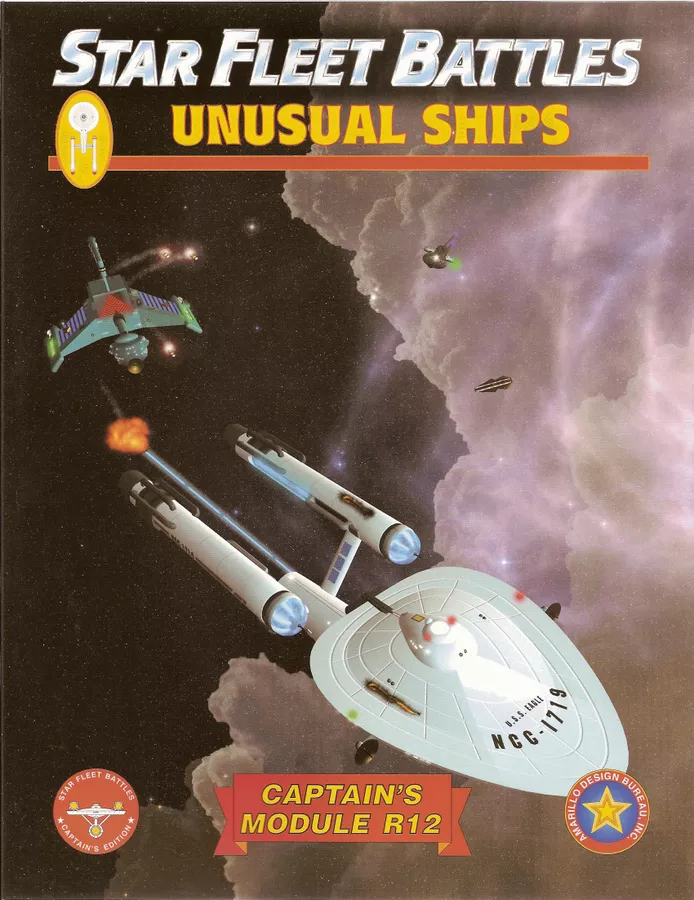
I think this is most likely to happen when the game rules are voluminous and complex enough that it’s hard even for experienced designers or playtesters to anticipate all the ways that different game elements will interact with each other. And so it’s no surprise that my favorite examples of this phenomenon come from the spaceship combat wargame Star Fleet Battles (SFB), one of the most complex games I’ve ever played.
I’ll describe my favorite example of rules incentivizing behavior that seems unlikely to have been the intended vision: the Mizia Effect in SFB.
The Mizia Effect (named after, I believe, the player who first articulated it) is a way to make your attacks more effective by exploiting a quirk in the way the game records damage.
To explain the Mizia Effect, I need to briefly describe the way attacks and damage work in SFB.
In SFB, you control one or more starships and are usually out to blow up the other player’s ships. If you can blast your way through the enemy’s shields, your attacks start damaging vital internal ship systems. But not all internal ship systems are equally vital; damaging minor systems (like science labs or security stations) has little effect on the enemy ship’s fighting power. But damage the “right” systems (like weapons or engine power) and you can profoundly degrade their combat ability, ruining their day and making your victory much more likely.
So how do you determine which systems get hit? Well, each time damage is inflicted, you roll a die and consult a chart that lists, in order, which systems have been hit (the more damage you do, the further down the chart you go, checking off systems that have been hit).
Usually, when attacking an enemy ship, you just fire all your available weapons at once, total up the damage from all those attacks, roll on that damage chart, and go down the chart checking off damaged systems. It’s convenient to combine your attacks like this, and it also feels very cinematic. Imagine Captain Kirk shouting “Give them everything we’ve got!” and the Enterprise unloading its arsenal of phasers and torpedoes at a Klingon Bird of Prey and you get the picture.
What clever players noticed, however, is that this chart ever so slightly frontloads important systems (like weapons and engine power) toward the top of the list.
Can you see where this is going?
What players realized is that if you split that mega-attack into a bunch of smaller, separate attacks, each of those smaller attacks would trigger a fresh roll on that all-important damage table. And since critical systems are slightly overrepresented at the top of that table, a series of small attacks will damage more of those important systems than one big satisfying attack will.
Here’s an example: if you have five phasers that all fire at once, they combine their damage and might hit a total of 10 internal systems, determined by one roll on the damage table.
But if you fire those five phasers separately, each of those tiny separate attacks only damages 2 internal systems but each triggers a fresh roll on the table. Which has the most important systems listed at the top.
Now, there’s a little more complexity to this; it takes skill and knowledge of the rules to set up a situation where you can do lots of consecutive little attacks like this. But I won’t bore you with the exhaustive details. Suffice it to say that in every SFB game I ever played, players went out of their way to stagger small individual attacks across multiple impulses (what might be called “turns” in another game), rather than firing everything at once. Any SFB veteran will tell you that understanding and exploiting the Mizia Effect is a fundamental requirement of playing effectively.
Is it a cheesy tactic that ruins the game? No; everyone can exploit this equally, so it’s not unfair. Are you a bad person for noticing that the damage table can be exploited like this? Again, no.
But does it create somewhat bizarre situations where giant starships, locked in a duel to the death, goofily exchange lots of little pinprick attacks instead of unleashing glorious alpha strikes?
Yes. Yes it does.
(I don’t keep up with the SFB community much, but the last time I checked, the designers did not consider this a flaw in the game system. And as far as I know, the damage system and table remains unchanged. To be honest, this makes me glad: quirks like this add flavor to a game system that is otherwise very complex and more than a little humorless.)


 by
by 