Monthly Archives: October 2016

Stephen King Short Story Project, #45: “Bad Little Kid”

The story: “Bad Little Kid,” collected in The Bazaar of Bad Dreams. First published in 2014 (in German and French, interestingly enough). Wikipedia entry here.

Spoiler-filled synopsis: Throughout his life, George Hallas is visited by an unaging schoolyard bully who appears every few years to murder somebody George holds dear. George eventually contrives to kill this apparently demonic being, but at the cost of his own life: he is convicted and executed for murdering a child. The story’s final pages make it clear that the bully is no figment of George’s imagination.

My thoughts: What would you say is the archetypal Stephen King villain? To be sure, he’s created quite a few classic bad guys, from creepy supernatural entities (Pennywise from It) to psychotic madmen (Jack Torrence from The Shining). But if you ask me, the definitive King villain type is the schoolyard bully.
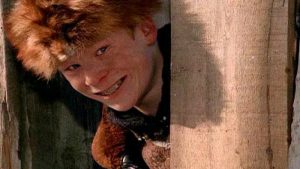
Imagine this guy showing up in your life every few years.

Imagine this guy showing up in your life every few years.

Bullies—actual steal-your-lunch-money bullies—are a recurring menace in King novels and stories. Many of King’s other villains are just grown-up versions of the bully (like the abusive husband/father, sadistic prison guard, etc.). And even his most terrifying supernatural villains (again, like the one in It) often behave exactly like bullies, right down to deploying fat jokes and crude sexual slurs intended to dishearten victims.

This might seem a little ridiculous at first, and it is a bit jarring when a nightmarish Lovecraftian entity pauses to tease its victims about their asthma. But King knows that horror is more effective when it exploits real-life fears, and who among us hasn’t had some kind of upsetting encounter with bullying behavior? Whether it was getting pushed around on the playground or being ostracized at work, most of us have experienced the humiliation and helpless rage that comes from witnessing, or being victimized by, bullying.

And so here we are with “Bad Little Kid,” a story about an actual, stereotypical schoolyard bully. Throughout all of his life, George Hallas has been terrorized by a non-aging, apparently supernatural child who appears every few years to kill somebody he loves (usually through a sequence of events that can be passed off as a tragic accident). Whether it’s luring George’s best childhood friend into the path of oncoming traffic or harassing his aging nanny with threatening phone calls until she has a heart attack, this very bad little kid has it out for George. (George narrates this story from death row—he ultimately managed to gun down the evil kid, but of course to the rest of the world it looked like he murdered an innocent child in cold blood.)

Two things stand out to me about this story. First is that it’s in many respects a retread of “Sometimes They Come Back,” an early King story also involving ageless, murderous supernatural bullies. Unfortunately, “Bad Little Kid” comes out worse in a comparison between those two stories. In “Sometimes,” the beleagured protagonist devises a truly original way of dealing with the bullies: demon summoning. By contrast, in “Bad Little Kid,” George simply buys a gun and shoots his tormentor. Gunning down your enemy might be the most American way to deal with problems, but from a narrative perspective it’s a lot less interesting than calling on infernal powers.

Second, “Bad Little Kid” allows for some interesting speculation about what’s really going on here… only to dash that ambiguity with a strangely disappointing denouement that reveals the evil bully to be an actual, real demonic being. The story hints at various alternative theories about George’s predicament. It might be that George is inventing the “bad little kid” in a desperate attempt to attach some kind of cosmic rationale to the seemingly meaningless (but natural) deaths of those he loves. Or the “bad little kid” might be a delusional manifestation of George’s own murderous impulses—most of the victims are women with some kind of perceived weakness or vulnerability (disability, mental illness, minority status, etc.) who might have triggered some kind of hidden misogynistic reaction in George. But rather than leave us pleasantly uncertain of the explanation, King settles on what I would say is the least interesting option: the bad little kid is a demon from hell.

This story also gives King a chance to once again articulate what I take to be his own understanding of the “problem of evil.” Asked to explain why the demonic bully chose to pick on him, George retorts:

You might as well ask why one baby is born with a misshapen cornea […] and the next fifty delivered in the same hospital are just fine. Or why a good man leading a decent life is struck down by a brain tumor at thirty and a monster who helped oversee the gas chambers of Dachau can live to be a hundred.

This is a competent story, but it’s overshadowed by many other King works that explore similar ideas. I recommend the cruder, but more compelling, “Sometimes They Come Back” instead.

Next up: Let’s shift gears and read something with a bit more heft: “The Mist,” a novella-length story collected in Skeleton Crew.

Facebooktwitterredditpinterestlinkedinmailby feather

Stephen King Short Story Project, #44: “L.T.’s Theory of Pets”

The story: “L.T.’s Theory of Pets,” collected in Everything’s Eventual. First published in 1997. Wikipedia entry here.

Spoiler-filled synopsis: A blue collar man named L.T. recounts a humorously embellished account of his failed marriage to his wife, Lulu, and the role that their pet dog and cat played in breaking up the marriage. What L.T. studiously avoids mentioning in this bittersweet reminiscing is that Lulu was murdered by a serial killer shortly after their breakup.

My thoughts: This is an odd one. It’s not odd that King occasionally takes a break from the horror and suspense genres—most of his short story collections contain one or more tales that deviate from the gruesome norm. This story is odd because it’s unusually paced, and because after a lighthearted, comical, and touching tale of a marriage that didn’t quite work, it ends on a surprisingly dark note.

King writes in a foreword to this story that “L.T.’s Theory of Pets” is in part an experiment in lowering the reader’s guard and then striking while they’re emotionally vulnerable. And he’s reasonably successful in doing so: despite a few vague hints early on that there’s a darker context to the story, King lulled me into complacency with L.T.’s flavorful recounting (to the story’s narrator, a friend and coworker) of his marriage’s final year. L.T. and his wife Lulu may have been in love, but they just don’t seem to have been destined for a successful marriage. Childless, they buy each other pets (a dog for L.T. and a cat for Lulu) as gifts; comically, L.T. and Lulu wind up hating “their” pet but becoming attached to their spouse’s. Their building irritation with their spouse’s pet serves as a proxy for and reflection of their frustrations with their own marriage, until Lulu finally picks up and leaves.

L.T.s account, which takes up the bulk of this short story, is reasonably fun. King tries to emulate the speech mannerisms of a modestly-educated meat-packing plant worker, and the result is a mildly humorous story in the vein of Dave Barry: the usual gags about men leaving the toilet seat up and the like. L.T. comes across as an unappreciative husband and Lulu as a flighty wife; we’re a bit sad but not especially surprised when Lulu leaves.

In the story’s final pages, however, things take a turn for the bleak: Lulu left L.T. to move back in with her mother, but never made it. While her body was never found, it seems certain that she fell victim to the “Axe Man,” a serial killer preying on women in the area. The narrator of “L.T.’s Theory of Pets” muses that L.T.—who still loves and misses his wife, however annoying she was—is unable to accept this reality, and uses his oft-repeated story of a marriage ruined by pets as a mechanism of denial. Wracked with sorrow and guilt (Lulu wouldn’t have died if he hadn’t driven her out, after all) L.T. clings to the hope that Lulu is out there somewhere alive and well.

As I said, an odd story. I was waiting for L.T., or the story’s narrator, to be revealed as the Axe Man, but King doesn’t take that route. In that sense, it’s nice to be surprised. And I always enjoy King’s depictions of married relationships; he relates with insightful clarity the ways that spouses love and exasperate each other. Whether this all hangs together as a good story once you add the discordant tone of serial murder to the mix, I’m not sure. I respect the effort to emotionally disarm and then ambush the reader, and to branch out from King’s usual fare. But the slightly goofy account that takes up most of this story isn’t strong enough to bear much narrative weight, and the combination of I Love Lucy-style yuks and murder doesn’t work all that much better than L.T.’s marriage.

Next up: Let’s jump back into some straight-up horror with “Bad Little Kid,” from The Bazaar of Bad Dreams.

Facebooktwitterredditpinterestlinkedinmailby feather

Stephen King Short Story Project, #43: “Gramma”

The story: “Gramma,” collected in Skeleton Crew. First published in 1984. Wikipedia entry here.

Spoiler-filled synopsis: Eleven-year-old George has been left alone for a few hours to care for his aging—and dying—grandmother, an unpleasant woman whom he has always feared. “Gramma” dies on his watch, but that’s not the end of it: Gramma was a powerful witch in life, and her death is part of a plan to permanently possess George. The extent to which her plan succeeds is left unclear by the story’s final pages, in which George has acquired Gramma’s infernal powers but has possibly retained at least some of his own identity.

My thoughts: What would it be like to have a witch in the family? What if that witch was not a quirky spellcasting spouse, but a domineering matriarch willing to kill her own children if they crossed her? And what if, in her old age, that witch became senile, unable to control her powers?

Like this, but with more Hastur the Unspeakable.

Like this, but with more Hastur the Unspeakable.

But I’m getting ahead of myself; for the first part of the story, it’s not clear that Gramma (who is offscreen for much of the story) is anything other than a completely ordinary old woman in the final stage of life. It is thus actually unclear what manner of story we’re dealing with, and my initial reaction was nervousness at the theme of old age and declining health. As many families can attest, caring for a dying relative can be a painful and emotionally harrowing experience for everyone involved, and I wasn’t sure I wanted to read a story that made light of that. Of course, horror stories are most effective when they can exploit an emotional vulnerability in the reader, and King has rarely hesitated to connect his supernatural horrors to real-life ones: parents’ loss of a child (Pet Sematary), domestic violence and miscarriage (Rose Madder), to name just a few.

Eleven-year-old George is terrified of his grandmother, and it initially seems that he’s simply unable to process the stark mortality exhibited in Gramma’s decaying physical and mental state. However, things shift into more recognizeably Stephen King territory as George slowly pieces together scattered family memories and vague comments by other nervous relatives to conclude that there’s something much more fundamentally wrong with Gramma: in her youth, she forged some kind of relationship with dark (Lovecraftian, actually) powers to bear healthy children and secure family prosperity during the Great Depression. Gramma would be a sympathetic figure if it stopped there, but as the years wore on, Gramma occasionally used her power to murder people (even family members) who crossed her and to generally keep her family living in constant fear. Now, in her descent into senility, she has seemingly lost control of her powers to unpredictable and unpleasant effect:

Sometimes, when she had her “bad spells,” she would (as Mom put it) “act out the Tartar,” calling for people who weren’t there, holding conversations with total emptiness, mumbling strange words that made no sense. On one occasion when she was doing this last, Mom had turned white and gone in and told her to shut up, shut up, shut up! George remembered that occasion very well, not only because it was the only time Mom had ever actually yelled at Gramma, but because it was the next day that someone discovered that the Birches cemetery out on the Maple Sugar Road had been vandalized—gravestones knocked over, old nineteenth-century gates pulled down, and one or two graves actually dug up—or something. Desecrated was the word Mr. Burdeon, the principal, had used the next day when he convened all eight grades for Assembly and lectured the whole school on Malicious Mischief and how some things Just Weren’t Funny.

Getting warmer, but needs more nameless horror.

Getting warmer, but needs more nameless horror.

To George’s simultaneous terror and relief, Gramma dies while he’s in the house with her. And the ensuing sequence, which tracks George’s mental state as he prepares to go in to check the body and cover it, is some of Stephen King’s absolute finest suspense writing. It is a truism that scary stories are usually much more effectively frightening before the monster shows up, and King demonstrates this well here with a truly nerve-wracking dozen pages. The reader suspects with George that the wicked grandmother isn’t really out of the picture, and King stretches this tension out as long as he can. When Gramma does finally come lurching back from the dead to chase George through the house, it’s almost a relief.

Gramma’s plan puts her pretty squarely in Evil Old Hag territory; she apparently (it’s not entirely explained) aims to escape death by transferring her own mind and spirit into George’s body. (The extended period of senility may or may not have been a ruse, but it’s clear Gramma has been planning this for some time.) George tries to defend himself by calling on the Lovecraftian entity Hastur, Gramma’s evil patron, but it’s unclear if it works; King switches scenes before we find out. At the end of the story, George is still with us, but clearly has absorbed Gramma’s supernatural powers and her malevolent attitude. We’re left to guess whether Gramma has full control of poor George, or if George somehow managed to retain control over himself.

All in all, this is a very effective story—I’m not often truly creeped out by King stories, but this one gave me a few honest-to-goodness chills. Beyond the solid suspense writing, there are just so many compelling ideas packed into this story: we’ve got a cultist gone senile, a strong-willed matriarch driven to preserve her family through dark means, some unexpected Lovecraftian touches, and creepy mind/body switching (itself a Lovecraftian trope). I’d call this one of the stronger King stories I’ve read thus far.

Next up: “L.T.’s Theory of Pets,” from Everything’s Eventual.

Facebooktwitterredditpinterestlinkedinmailby feather

Stephen King Short Story Project, #42: “The Dune”

The story: “The Dune,” collected in The Bazaar of Bad Dreams. First published in 2011. Wikipedia entry here.

Spoiler-filled synopsis: As a child, Harvey Beecher discovered something bizarre: a tiny island with a sand dune on which, each day, is written the name of somebody who will soon die. Now a bitter old man, Beecher returns from his latest visit to the dune and hastily summons his lawyer to finish drafting his will. Whose name do you think he saw scrawled in the sand?

My thoughts: Premonitions of death—especially of your own death—are a beloved staple of spooky storytelling, from the Bible to modern teen-scream movie franchises. That’s the rich vein that King taps in this short tale about a grumpy retired judge who’s found a way to get advance notice of upcoming deaths.

Pictured: a sand dune (non-deadly-premonition variety).

Pictured: a sand dune (non-deadly-premonition variety).

Since childhood, Judge Beecher has been visiting on an almost daily basis an isolated island where he can read, scrawled in the sand on a dune, the names of people who will soon die. When, after his most recent visit to the island, he hastily summons his lawyer to complete work on his last will and testament, we assume that Beecher has finally seen his own name written on the creepy dune. King feints in this direction for most of the story before producing a twist ending: Beecher hasn’t seen his own name in the sand, but that of his lawyer… hence the frantic rush to get the lawyer to complete work on Beecher’s will (before the lawyer dies and Beecher has to go through the hassle of finding new legal assistance).

Effective twist endings are tricky to pull off, particularly these days when we’ve seen so many of them in stories, books, and film. Yet we readers still hope for and expect them, and I don’t envy writers who have to try and mislead a readership that is actively hunting for the trick. Here, King knows you’re scrutinizing the story for the inevitable twist, so he does his best to make you think you’ve guessed what that twist will be, before surprising you in the story’s final sentences with a different twist. And it works, but imperfectly; to keep readers thinking down the wrong trail, King has to try a little too hard, mainly by emphasizing a few too many times that Beecher is very old and frail. When the punchline arrives, it’s fun, but because you hardly know and aren’t emotionally invested in the lawyer character, it has little lasting impact.

There are a few other noteworthy bits in this short tale. First is the mysterious dune itself. As usual, King resists the urge to try to explain what the deal is with the dune. Beecher does, however, propose one interesting possibility: that the dune is a location where for some reason the skin of the cosmos has worn thin, exposing a tiny glimpse at the inner workings of fate to anyone (un)fortunate enough to stumble across it. Depictions of supernatural encounters as largely random, impersonal, and undeserved are common throughout King’s writing.

Secondly, there’s the fact that Beecher doesn’t take any action to change or subvert these prophesied futures. Stories in which people receive frightening premonitions of the future typically focus on their (usually futile) efforts to change that future. (King has written tales of this sort as well—most notably his novel 11/22/63, about a time-traveler’s attempt to prevent the JFK assassination.) You might imagine that Beecher would act on his terrible knowledge by warning doomed people, destroying the dune, or something else. But despite his daily visits to the dune, the only time Beecher seems to have ever taken action is, as in this case, when he stands to be personally inconvenienced by the foretold death.

All in all, this is a short, solid, but largely unremarkable tale with a fun little twist ending. There’s not a lot to “The Dune” beyond that surprise; this is a simple story that exists entirely to deliver you unsuspecting to the final sentence’s revelation.

Next up: “Gramma,” in Skeleton Crew.

Facebooktwitterredditpinterestlinkedinmailby feather