Monthly Archives: October 2015

Stephen King Short Story Project, #32: “N.”

The story: “N.”, collected in Just After Sunset. First published in 2008. Wikipedia entry here.

Spoiler-filled synopsis: A psychiatrist counsels a new patient who exhibits extreme symptoms of obsessive-compulsive disorder. The patient, referred to in the doctor’s notes as “N.”, claims that his compulsive, ritual behavior is necessary to prevent the incursion into this world of extra-dimensional Lovecraftian horrors. When N. commits suicide, the psychiatrist investigates… and soon comes to share the late N.’s obsessions.
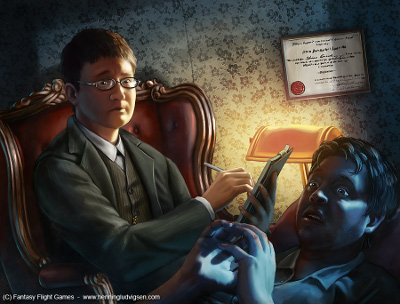
My thoughts: King once again returns to the themes and mythology of H.P. Lovecraft in this novella-length story. Although King notes in the closing notes of Just After Sunset that “N.” is an homage to Arthur Machen’s influential 1890 horror story The Great God Pan, it’s got “Lovecraft” written all over it.

And you know: it’s hard to make a Lovecraftian tale hit home these days. For one, Lovecraft’s tentacled monsters can seem more goofy than terrifying (my wife sips her morning coffee while wearing adorable plush Cthulhu bathroom slippers). The nihilist vision that lay behind Lovecraft’s stories—the fear that Christianity might be horribly wrong about mankind’s place in the cosmos—lacks the punch it had a century ago. And have I mentioned the racism?

All of this makes it interesting to see King returning to explicitly Lovecraftian territory late in his career. King has riffed on Lovecraft in earlier short stories, notably “Jerusalem’s Lot” and “Crouch End,” both of which paint rather neatly within the lines of the Lovecraftian sub-genre. With “N.”, however, King has found a twist with which to make the mythos his own: OCD. The man called N. stumbled (he says) across a Stonehenge-esque circle of stones while exploring rural Maine. A glimpse of something horrific in the circle convinced him that only through continuous, repetitive, time-consuming ritual acts (centered around numbers and geometry) can the unraveling fabric of reality be strengthened against the efforts of the nightmare entities trying to break through it. Without these activities, combined with regular, harrowing trips to the circle to spiritually reinforce it, the circle will fail and release whatever it’s holding back.

After confessing all this to his psychiatrist, N. commits suicide, overwhelmed by the singular burden of having to keep the world safe. The psychiatrist (who narrates most of the story through his counseling session reports) proceeds to investigate, encounters the same circle and Lovecraftian menace (a being called “Cthun”), descends into the same madness that claimed N., and kills himself as well. The story’s final pages suggest that several other people (the psychiatrist’s sister, and then a family friend) follow the two men into obsession and suicide; we imagine these four doomed souls as very short-lived links in a chain that has stretched through centuries or millenia.

The theatrical Lovecraftian bits of “N.” (the gothic circle of stones, the tentacled Cthun) are familiar and unremarkable. But what King absolutely nails about the Lovecraft mythos here is the insidious, merciless power of knowledge. What dooms these characters is what they know—once the veil of ignorance about the true, precarious state of humanity is torn away, they can never un-learn what they now know. In Lovecraft’s world, truth is a toxic meme, spreading from person to person with fatal results. Like a virus, it spreads to a new host just as the old host begins to break down. And even if it isn’t truth—if these characters are killed by a shared delusion—then we’re still dealing with something considerably more terrifying (in a 21st-century context) than Lovecraft’s slimy fish-gods: a deadly, highly contagious piece of information.

This is a very strong story. It’s light-years beyond straight-up Lovecraft pastiches like “Jerusalem’s Lot.” It makes use of Lovecraft staples like an epistolary narrative and descents into madness, but in the service of a very Stephen King tale. Highly recommended.

Next up: “Dedication,” in Nightmares and Dreamscapes.

Facebooktwitterredditpinterestlinkedinmailby feather

Stephen King Short Story Project, #31: “The Reaper’s Image”

The story: “The Reaper’s Image,” collected in Skeleton Crew. First published in 1969. Wikipedia entry here.

Spoiler-filled synopsis: An arrogant art collector visits a private museum to inspect, and possibly purchase, a famous antique mirror. The mirror, however, is reputed to be cursed. Think something bad might happen when the scoffing collector gazes into it?

mirrorsh2My thoughts: There are a lot of ways you can doom yourself in a horror story. You might decide to descend alone into the lightless basement to check the circuit breaker. You might lean forward to examine the “dead” monster at extremely close range, because it’s dead and there’s no way it poses any danger to you. And here’s another way you can telegraph your impending death: scoff derisively at people who insist that an object is cursed and that you should stop messing with it.

Short, simple, and predictable, “The Reaper’s Image” follows this convention precisely. It features only two characters: a sneering art collector who hopes to buy a famous antique mirror, and the mirror’s old caretaker, who has witnessed its curse in action firsthand. As legend goes, every great now and then, a person looking into the mirror spots something reflected in it that nobody else can see—something that looks like a shadowy figure standing behind them. Once you’ve seen it, you’re destined to vanish without a trace shortly afterwards.

As cursed antiques go, the mirror is mildly interesting. It dates back several centuries, and intriguingly it seems to “claim” people infrequently and randomly. There is mention of a small handful of other sister mirrors—some long destroyed, others in private collections—that might or might not also be cursed. And the curse itself is anti-climactic, but in a good way: instead of the cursed person dying in a freak accident or dropping of a heart attack on the spot, they are seized with a desire to leave the room (to get a drink of water, to grab something they forgot in another room, etc.). And once they step outside the door, they simply never return.

“The Reaper’s Image” is fun, but very lightweight compared to many of the other stories collected in Skeleton Crew. I note that its late-1960s publication date must make it one of King’s earliest published stories, which probably explains why it feels like a practice exercise rather than a fully-developed work. King is always happy to build off of familiar genre tropes, but usually he gives them one or two good twists to make his stories rise above the clichés. Here he doesn’t, and so “The Reaper’s Image” feels like a piece of pleasant filler. That said, it takes a grand total of about ten minutes of your life to read—that’s how much time I spend every night trying to convince my four-year-old son to use the potty before bed, and reading a mediocre Stephen King story is way more enjoyable than that.

Next up: “N.,” in Just After Sunset.

Facebooktwitterredditpinterestlinkedinmailby feather

Stephen King Short Story Project, #30: “All That You Love Will Be Carried Away”

The story: “All That You Love Will Be Carried Away,” collected in Everything’s Eventual. First published in 2001. Wikipedia entry here.

Spoiler-filled synopsis: A travelling salesman checks into a hotel in rural Nebraska intending to kill himself. However, his desire to pursue an unusual hobby/obsession just might be strong enough to keep him alive. The story ends ambiguously, leaving us unsure about his ultimate fate.

My thoughts: This is an odd, somber story. It’s somber because it immerses us in the mental state of a man contemplating suicide. It’s odd because the hobby that might give this man the strength to go on living is a bizarre one: he obsessively records bathroom-wall graffiti from public restrooms all around America. This is certainly not the first time that King has tenuously balanced a serious topic with a borderline bad-taste gimmick in the same tale. But he has a way of making these things work.

The focus on suicide makes me wonder what I would have made of this story had I encountered it during my big Stephen King obsession back in late high school and early college. At the time, I was writing mopey, overly-earnest short stories that involved a lot of death, suicide, and self-sacrifice; while I certainly wouldn’t have suggested that suicide was a good thing, it had a sort of romantic ring to it. (You can blame a too-young reading of The Sorrows of Young Werther. Or maybe Shōgun.) Today, however, with many years between me and my immature teenage self, it’s just a terribly sad thing to ponder. Not knowing where King was going with the topic, and not entirely trusting him to treat it with delicacy (the bathroom-graffiti sideplot didn’t help), I read this story nervously.

I’m relieved and happy to have been wrong, though. King’s empathy for Alfie, the suicidal salesman, is palpable. Alfie’s suicidal thoughts aren’t prompted by a single failure or point of shame, but rather by the accumulated weight of a life that has lost purpose. But Alfie is a good man and we desperately want him to pull through. I imagine that most authors can be said to “love” their invented characters, but read a few King tales and I think you’ll agree with me when I say that King goes a step further—he’s often actively rooting for his characters. Even the bad ones! (Look at King’s obvious love for the incredibly varied cast of The Stand, for instance.) For this reason, even though this story ends with the possibility that Alfie will go on to kill himself, you’re left with a very strong hunch that it’s going to be OK. Why wouldn’t we feel this way when the story itself seems to want Alfie to live?

So let’s talk about that bizarre hobby of Alfie’s: he records bathroom graffiti. Obscene limericks, lowbrow witticisms, incoherent pronouncements, and cries for help—Alfie records it all in his notebook, and over time starts to feel that he’s put his finger on the pulse of a dark, hidden, fascinating undercurrent of raw humanity. Alfie dissects the grammar of insane rants; he critiques the meter of dirty poems; he mulls over particularly compelling phrases. I expected at first that Alfie’s hobby was giving him a glimpse into what would prove to be some kind of supernatural, occult underworld lurking beneath the surface of American society; but King doesn’t go in that direction. Instead Alfie seems to have found a window into America’s clever, crazy, base, and 100% human collective id.

The very weirdness of this hobby might be what saves Alfie in the end—he delays suicide several times because he doesn’t want the police to find his graffiti journal and conclude that he was just crazy.

In his nonfiction writing, King has often sighed about the kinds of questions his fans direct at him, most especially “Where do you get your ideas?” But many King story ideas can be seen to originate in “everyday stuff you bump into as you go through life”—mundane things like road construction or graffiti. Whereas you and I have trained our minds to disregard the petty, routine details of everyday life, King is always on the lookout for ways to fit a story around them.

And need I mention that this story gives King a perfect excuse to recite a lot of dirty limericks that he’s clearly proud of? Admit it—that’d be pretty fun.

Next up: “The Reaper’s Image,” in Skeleton Crew.

Facebooktwitterredditpinterestlinkedinmailby feather

Stephen King Short Story Project, #29: “Dolan’s Cadillac”

The story: “Dolan’s Cadillac,” collected in Nightmares and Dreamscapes. First published in 1985. Wikipedia entry here. Read my introduction to this blog series.

Spoiler-filled synopsis: Elizabeth Robinson was murdered by car-bomb years ago by a wealthy, untouchable mob boss named Dolan to stop her from testifying against him in court. Unbeknownst to Dolan, her husband—an unremarkable, unassuming, forgettable man—has been plotting and planning ever since, waiting patiently for just the right opportunity to strike back. One summer, Robinson rigs an elaborate trap for Dolan on a Nevada highway… and manages to permanently bury Dolan and his beloved Cadillac beneath the desert sands.

Large_NEO43557_1My thoughts: Ah, revenge—the dish best served cold. “Dolan’s Cadillac” is a straightfoward and mostly satisfying story of long-delayed revenge, with almost no hint of the supernatural. In my last King short story writeup two years ago (“The Fifth Quarter”), I asserted that King is at least as good at writing mundane suspense as he is at writing supernatural horror. “Dolan’s Cadillac” is a solid example of that.

Revenge stories involving crime bosses and murdered wives are about as cliché as you can get. To give this hoary old chestnut a new spin, King subverts the trope of the hardcore vigilante avenger by making his protagonist a thoroughly average person, a man with no special revenge-related skills. He not a former special forces soldier, an intelligence agent with a “very particular set of skills,” a grizzled off-duty cop, or a millionaire martial-artist with an armored suit. Instead he’s a grade-school teacher, and through him King asks a fun what-if question: how would you, an average everyday person with a liberal arts degree and a boring office job, go about taking down a wealthy, paranoid, heavily-guarded mob boss?

King has fun with this concept. Robinson, the protagonist, considers but quickly discards Hollywood-esque revenge plans involving guns and cinematic heroics. Instead, he enacts (over the course of several years) an elaborate (maybe over-elaborate) plan of revenge that makes use of mundane skills and tools. When he notices that Dolan periodically travels along a specific stretch of desert highway, Robinson takes a summer job as a road construction worker. When the conditions are just right, he uses his skills to dig a long trench—just the right size to trap a car and prevent its passengers from escaping. Once he manages to detour Dolan’s Cadillac right into it, he buries the car and its passenger beneath tons of earth and asphalt.

In the afterward to Nightmares and Dreamscapes, King describes the process of writing this story as an excrutiating one due to the extensive research he had to do to make the trap plausible. And in fact, King spends the vast bulk of this story detailing the creation of Robinson’s trap. King is probably trying too hard: there is a palpable sense that King really wants you to accept this as something that could realistically be accomplished by one sufficiently dedicated man. It’s an admirable goal, and it succeeds, but at the cost of bloating the story’s page count considerably. King uses all the road-construction detail to stretch the suspense as far as it can go—but he stops just shy of the point where the story shifts from “suspenseful” to “boring.” I’ll admit I was starting to skim as Robinson’s preparations dragged on.

But the payoff proves worth waiting for. For one thing, as Robinson seals Dolan in his buried car, there’s a fun reference to “The Cask of Amontillado” for obvious reasons. And there’s a wonderful and characteristically King exchange between Robinson and the trapped Dolan, who (realizing he’s about to be buried alive) tries to bargain for his life:

“Five million.” It was the last coherent thing he [Dolan] said.

“I think not,” I replied, leaning on the shovel and wiping sweat off my forehead with the heel of one grimy hand. The dirt covered the roof of the car almost from side to side now. It looked like a starburst… or a large brown hand grasping Dolan’s Cadillac. “But if you can make a sound come out of your mouth which is as loud, let us say, as eight sticks of dynamite taped to the ignition switch of a 1968 Chevrolet, then I will get you out, and you may count on it.”

So he screamed, and I shoveled dirt down on the Cadillac. For some time he did indeed scream very loudly, although I judged he never screamed louder than two sticks of dynamite taped to the ignition switch of a 1968 Chevrolet. Three, at most.

Oh, Stephen King. It’s so good to be reading your stories again.

One last observation: as I mentioned above, there is almost no trace of the supernatural in this story. His dead wife Elizabeth does, however, speak to Robinson throughout—although I think this is probably best understood as Robinson’s subconscious. If it is the ghost of his wife, it breaks ranks with the stereotype in an interesting way: it’s bloodthirsty, urging Robinson on toward revenge and relentlessly pushing him forward, even when he’s physically exhausted. This is intriguingly different from the usual stereotype, in which the dead wife is depicted as so pure and innocent that you can’t really imagine her truly wanting her husband to cut a bloody swath of vengeance in her name.

Next up: “All That You Love Will Be Carried Away,” in Everything’s Eventual.

Facebooktwitterredditpinterestlinkedinmailby feather

The October Stephen King Short Story Project, Round 2: The Revenge

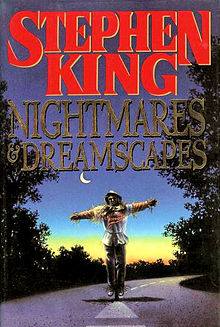
Nightmares&DreamscapesTwo years ago, I spent the month of October reading Stephen King short stories and writing up my reactions. It was a greatly rewarding experience for me, so I’m going to try it again: throughout the month of October, I’ll be reading one Stephen King short story each day (more or less), and recording my thoughts here.

As time allows, I may poke my head into some of King’s shorter novellas and side projects as well. But for the most part, I’ll be choosing stories from the following King collections:

  • Night Shift
  • Skeleton Crew
  • Nightmares and Dreamscapes
  • Everything’s Eventual
  • Just After Sunset

If you’ve got ready access to these books, I would love it if you read along with me. First up is “Dolan’s Cadillac” from Nightmares and Dreamscapes.

For the record, here’s what I covered in my first Stephen King short story project:

  1. You Know They Got a Hell of a Band
  2. Jerusalem’s Lot
  3. Fair Extension
  4. Word Processor of the Gods
  5. The Moving Finger
  6. The Raft
  7. Trucks
  8. The Road Virus Heads North
  9. The Doctor’s Case
  10. The Man in the Black Suit
  11. Strawberry Spring
  12. Sorry, Right Number
  13. The Monkey
  14. The Lawnmower Man
  15. That Feeling, You Can Only Say What It Is In French
  16. Beachworld
  17. The End of the Whole Mess
  18. Sometimes They Come Back
  19. Survivor Type
  20. Popsy
  21. Rainy Season
  22. In the Deathroom
  23. Children of the Corn
  24. Crouch End
  25. Mrs. Todd’s Shortcut
  26. Graveyard Shift
  27. I Am the Doorway
  28. The Fifth Quarter

I’ll be picking up where that list left off. Here’s my progress so far in round 2:

  1. Dolan’s Cadillac
  2. All That You Love Will Be Carried Away
  3. The Reaper’s Image
  4. N.
  5. Dedication
  6. The Cat From Hell
  7. Lunch at the Gotham Café
  8. The Long Walk
  9. The Night Flier
  10. Umney’s Last Case
  11. One For the Road
  12. The Langoliers
  13. Battleground
  14. Night Surf
  15. Mile 81

And beyond that, there are a few more:

  1. The Dune
  2. Gramma
  3. L.T.’s Theory of Pets
  4. Bad Little Kid
  5. A Death

I hope to hear from you in the comments as I read! Let’s get started, Dear Reader!

Facebooktwitterredditpinterestlinkedinmailby feather